
CrowdIQ
A crowd can build in minutes.CrowdIQ counts it as it grows.
How many people are here, right now? CrowdIQ, part of Apar Drishti, finds each person in the frame, even the small ones far from the camera, and follows them as they move. Each camera has its own limit, and your control room knows the moment a crowd goes over it.
Watch it work
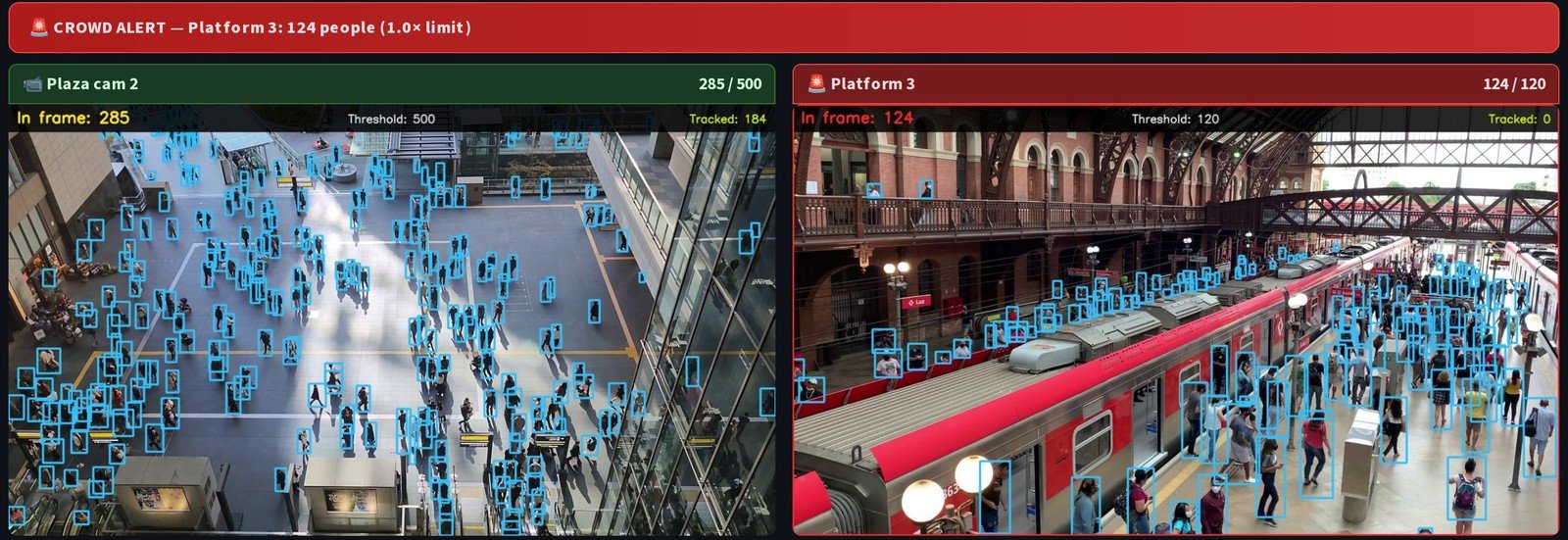
CrowdIQ on its real screens: people counted, the alert at the limit, the control room, and the vision model’s read.
The challenge
Your cameras see the crowd. Nobody can count it.
A crowd builds fast
A crowd can build in minutes, while the control room watches other screens.
Too many screens
Nobody can count heads on every camera, every minute.
An alarm that flickers
An alert that switches on and off with every dip is soon ignored.
Afterwards, no record
Without the picture and the count, the review runs on memory.
The idea
Every person counted. An alert at your limit.
How it works
From a count to the control room
Real screens from the working prototype, on public footage.
Counted, checked, sent, explained, kept
Every camera goes through the same steps, every second.
- The count is checked against that camera’s own limit
- Over the limit, the camera turns red and the alert holds
- The control room knows first; the vision model’s read follows
- 1The camera sees the crowd
- 2Each person found, even far from the camera
- 3The count, second by second, against the limit
- 4Over the limit: the camera turns red, the alert holds
- 5The control room knows: which camera, how many
- 6The vision model reads the scene and rates the risk
Every alert is kept, with what the operator saw and the frame the AI judged.
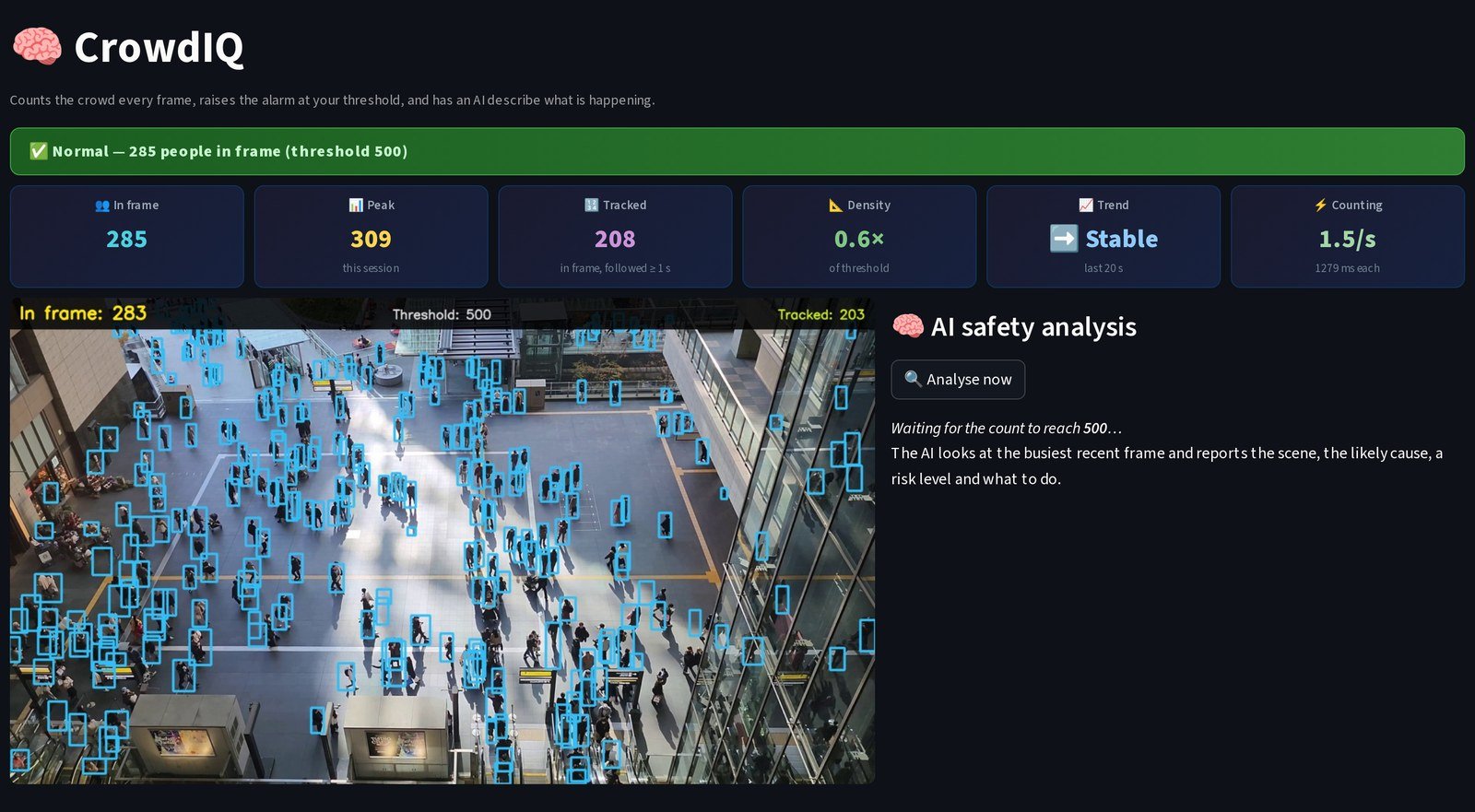
Every person in the frame
It finds each person, even the small ones far from the camera, and follows them as they move.
- Each person boxed on the picture
- People in frame, the peak, how many it is following, and the trend
- A green banner while the crowd is under the limit
Multiple cameras, one screen
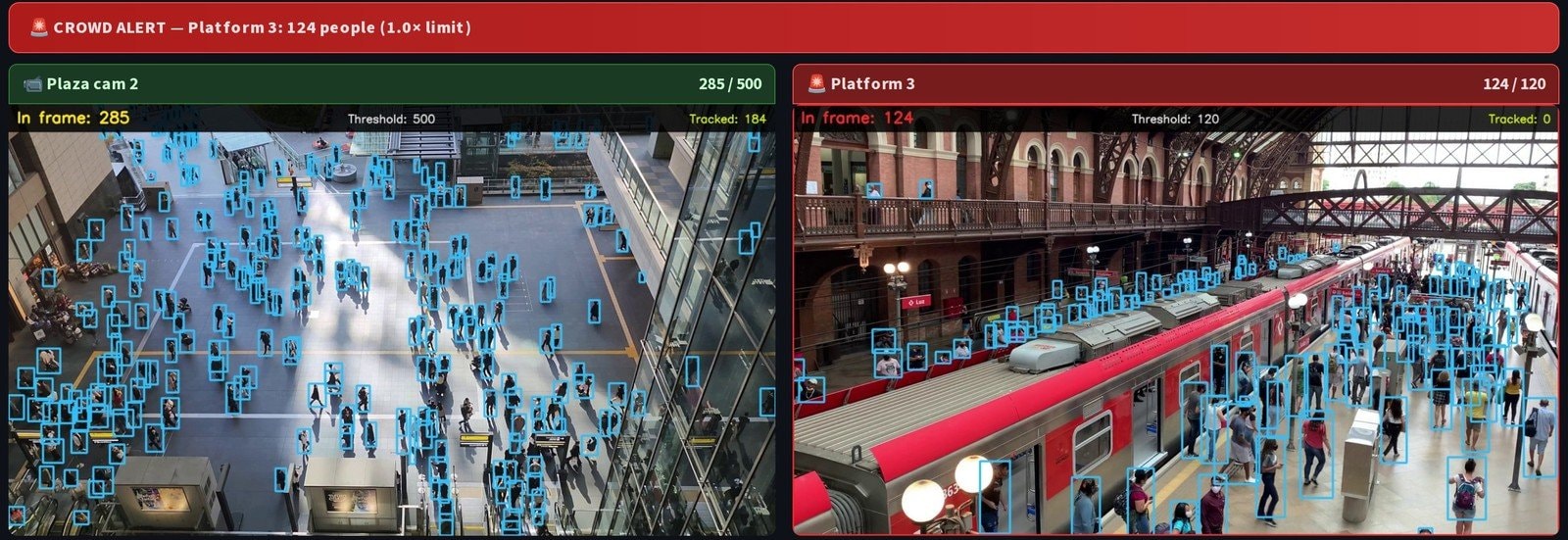
Each camera has its own limit, and turns red when the crowd goes over it.
- A limit for each camera: a platform and a plaza hold different crowds
- The banner names the camera and the count
- Pick a camera for its numbers and its chart
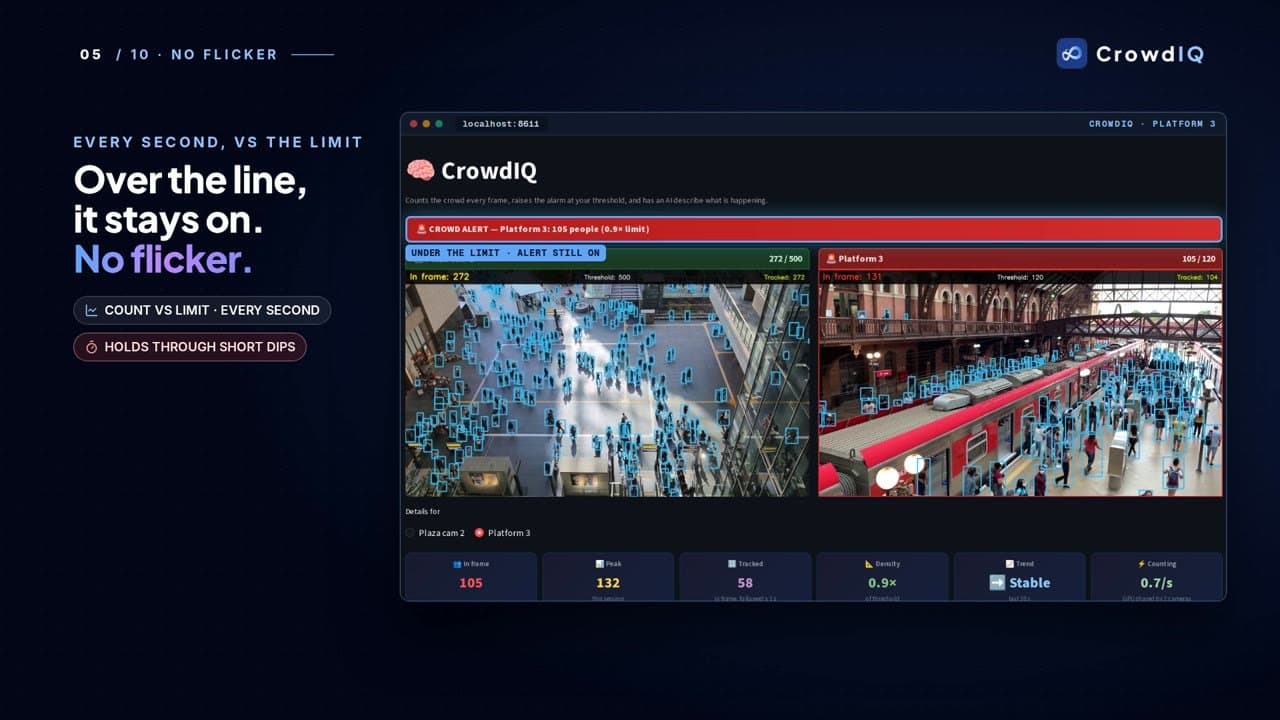
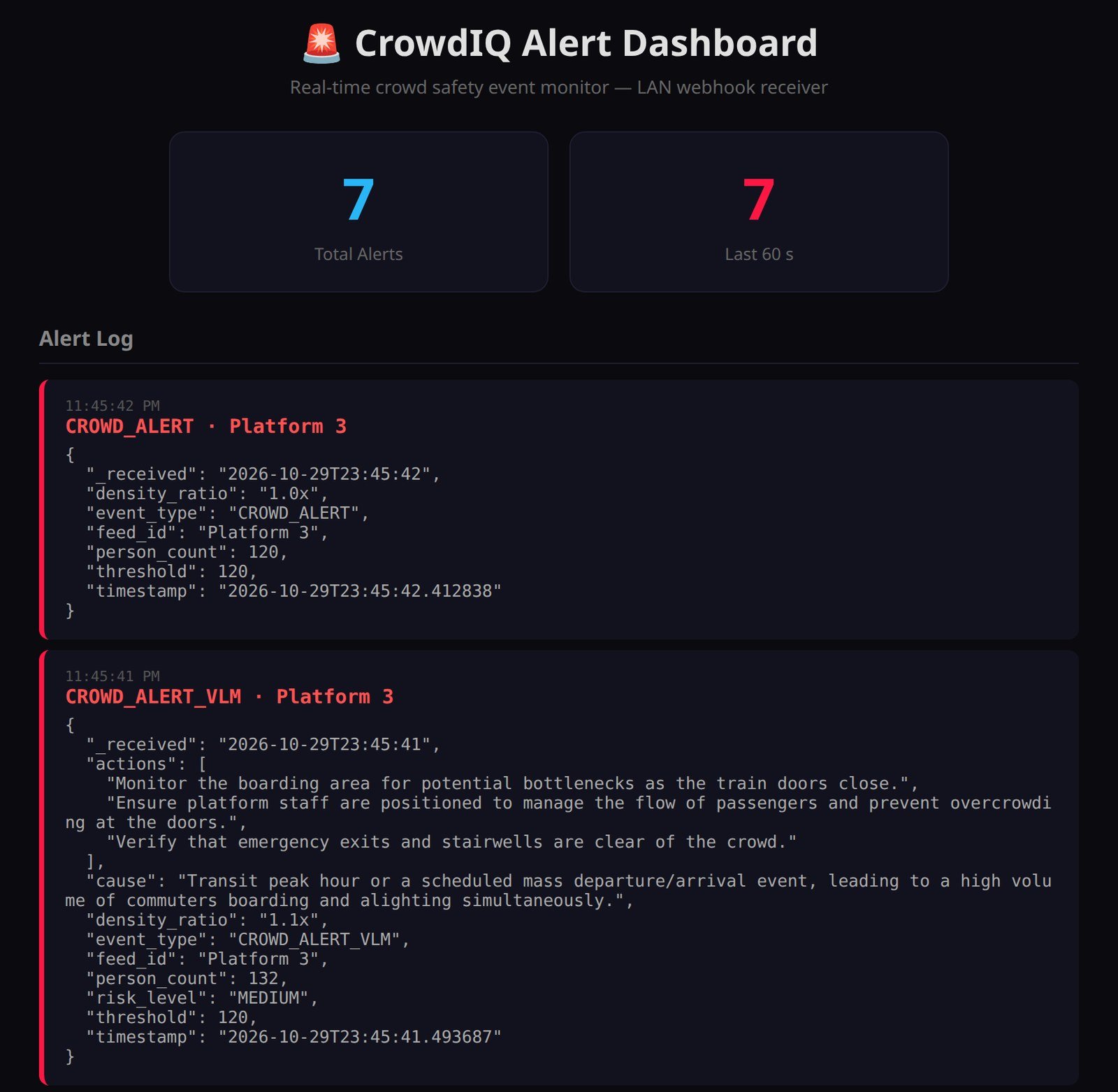
The control room knows at once
Which camera, and how many people. On a screen, over a serial line, or with a buzzer and a light.
- Once it crosses, the alert holds through short dips, so it does not flicker
- A control room screen, over your own network
- A serial line (RS-232), or a buzzer and a light
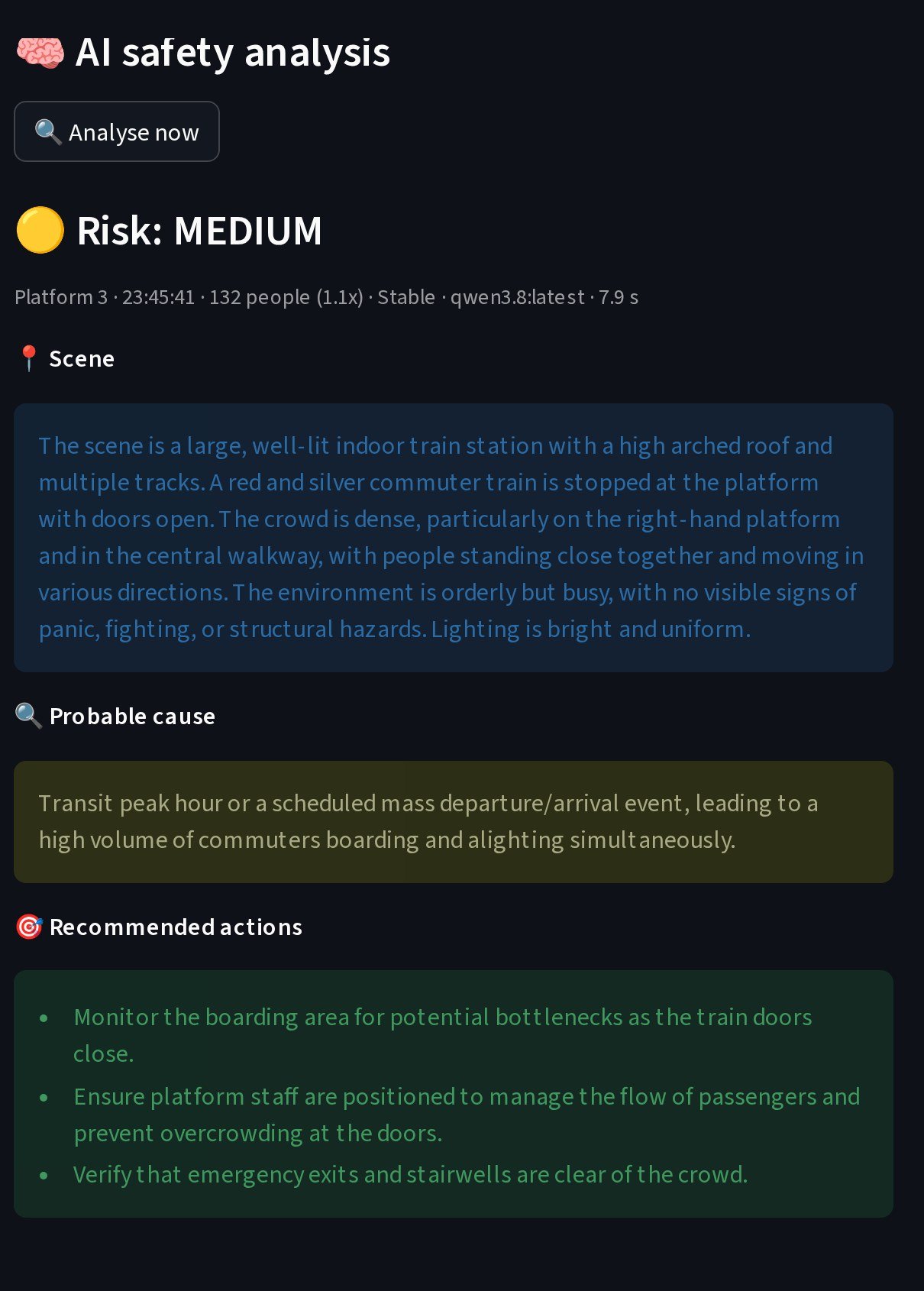
A vision model reads the scene
On your own server: it reads the scene, rates the risk, and says what to do.
- The scene, in plain words
- The probable cause
- Recommended actions for the team
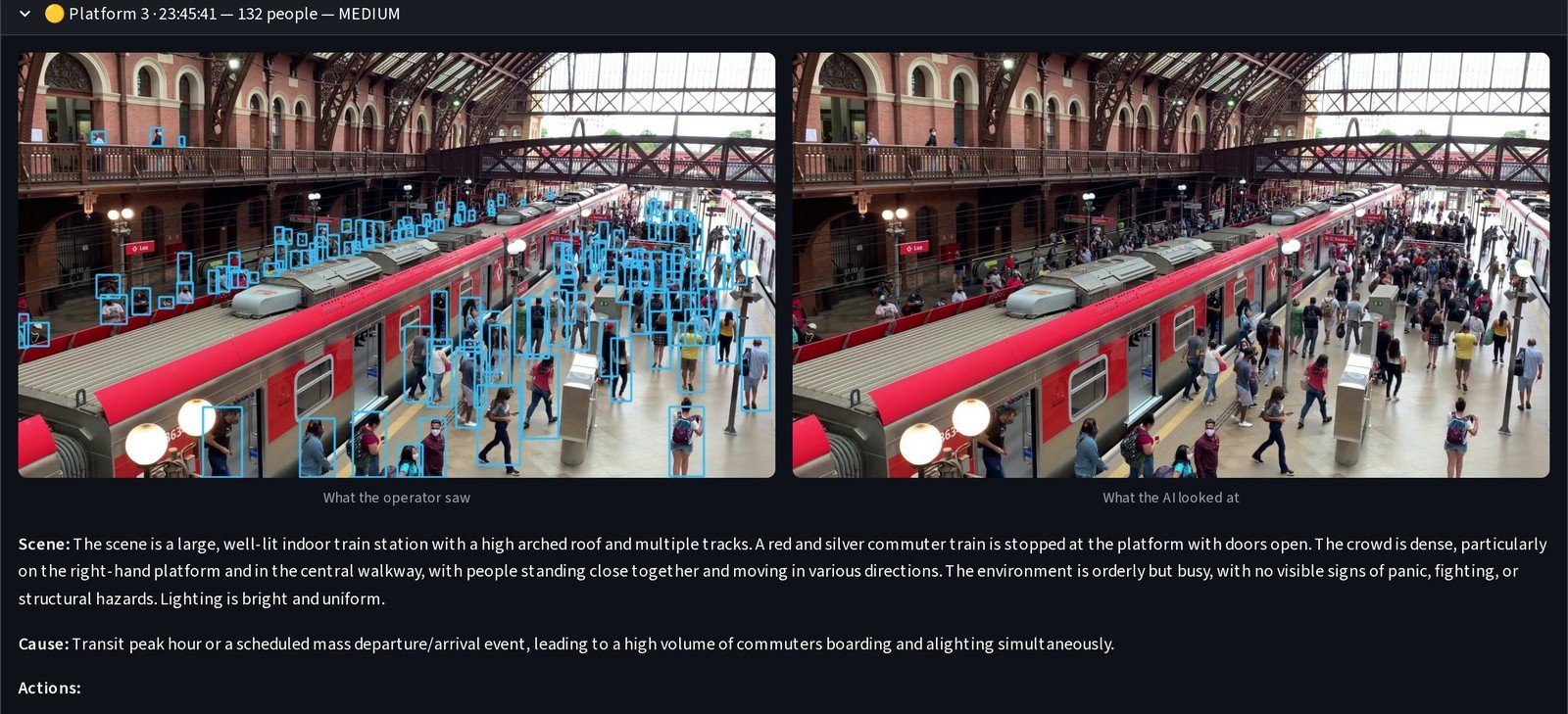
Every alert is kept
With what the operator saw, and the frame the AI judged.
- Both pictures, side by side
- The vision model’s note, kept with each alert
- Export the log for your records
How we engineered it
Six ideas behind an alert you can trust
What keeps CrowdIQ quick to warn, and steady once it has.
The small ones count too
It finds each person, even the small ones far from the camera, and follows them as they move.
A limit per camera
A platform and a plaza hold different crowds, so each camera has its own limit.
An alert that does not flicker
Once it crosses, the alert holds through short dips, so the control room sees one alert, not a light switching on and off.
The count alerts, the AI explains
The count raises the alert. The vision model then reads the scene, rates the risk and says what to do.
Built to plug into your site
Your cameras over RTSP, video files or an upload. The alert out to a screen on your network, a serial line, or a buzzer and a light.
Your own server
Counting, the alert and the vision model run on your own server. The footage never leaves your site.
What the build proves
A working prototype, built to your site
- Know how many people are here, right now, on every camera
- An alert at the limit you set: which camera, and how many
- The vision model’s read of the scene: the risk, and what to do
- A record of every alert, for the review afterwards
More screens
Every screen, from the working prototype
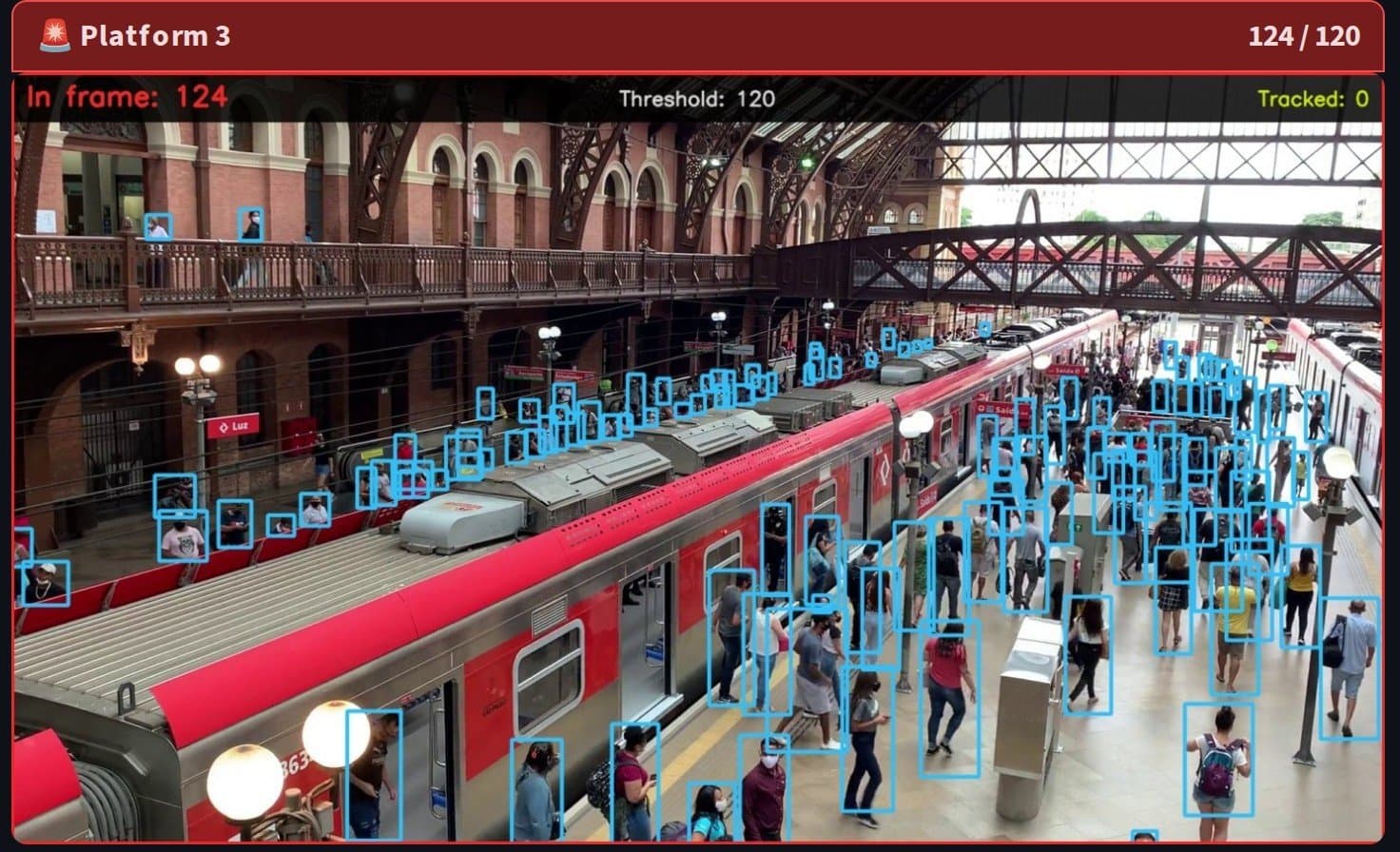
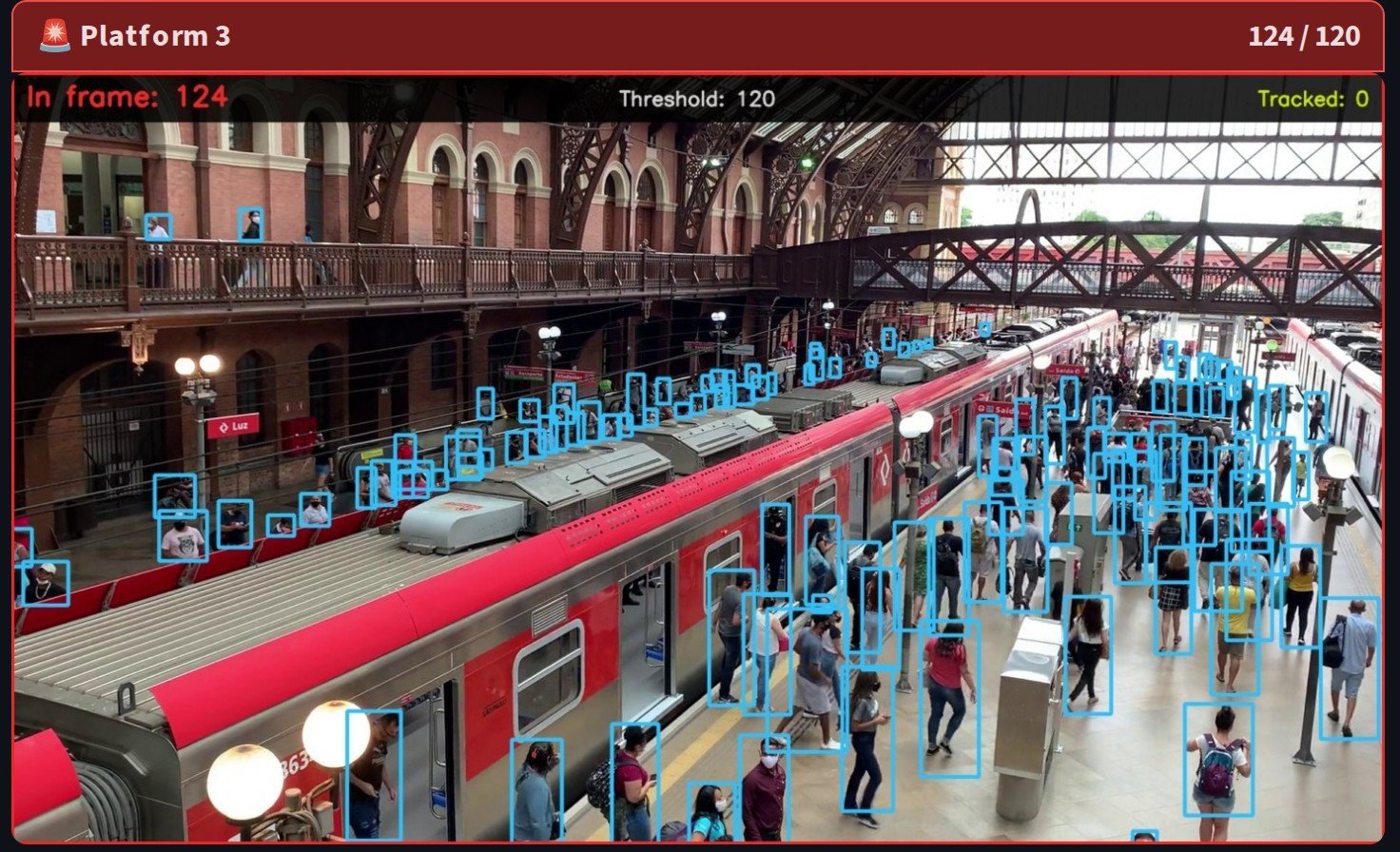
A station platform over its limit, every person boxed.